Rocketstove
Back to portfolio
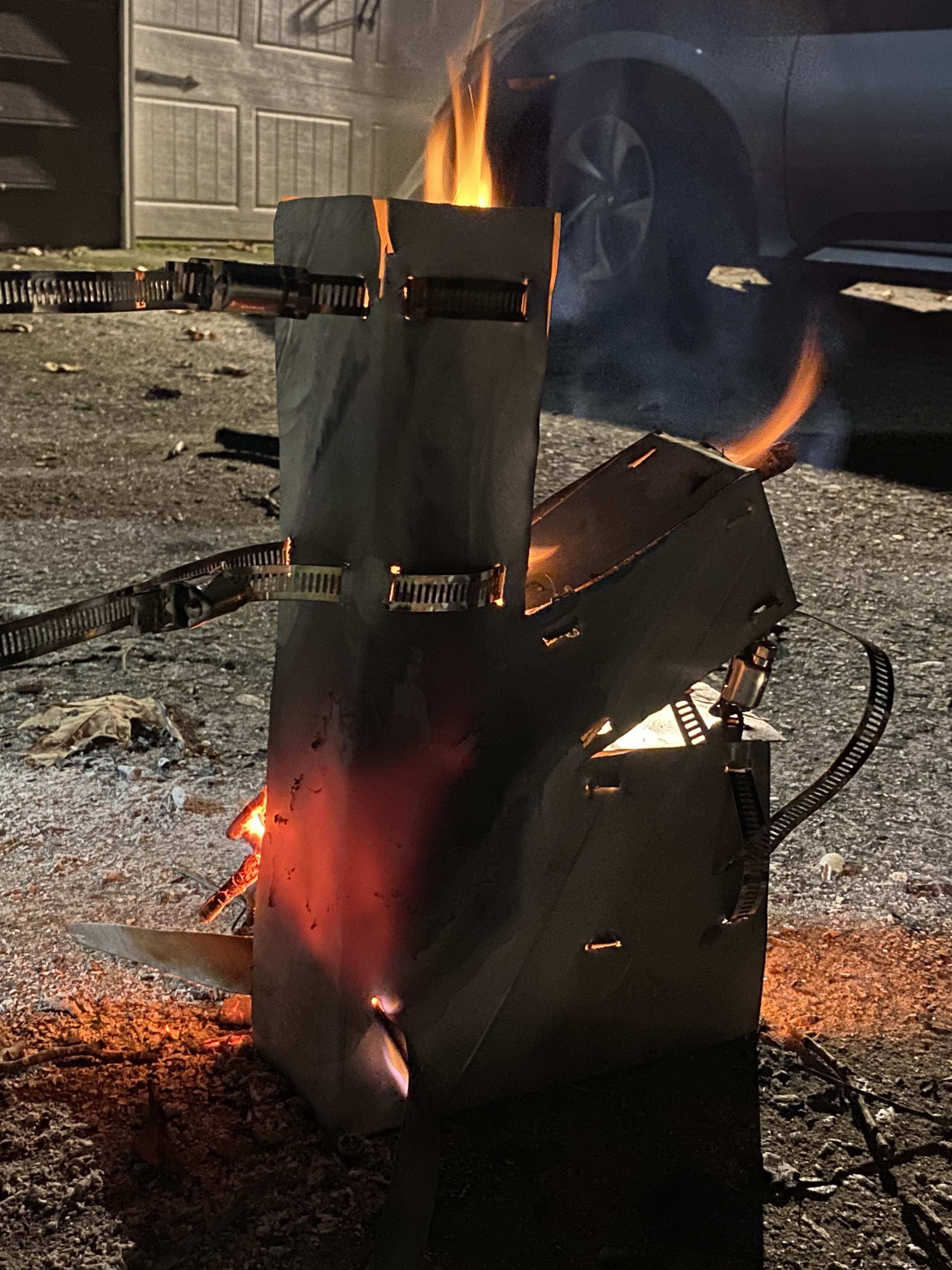
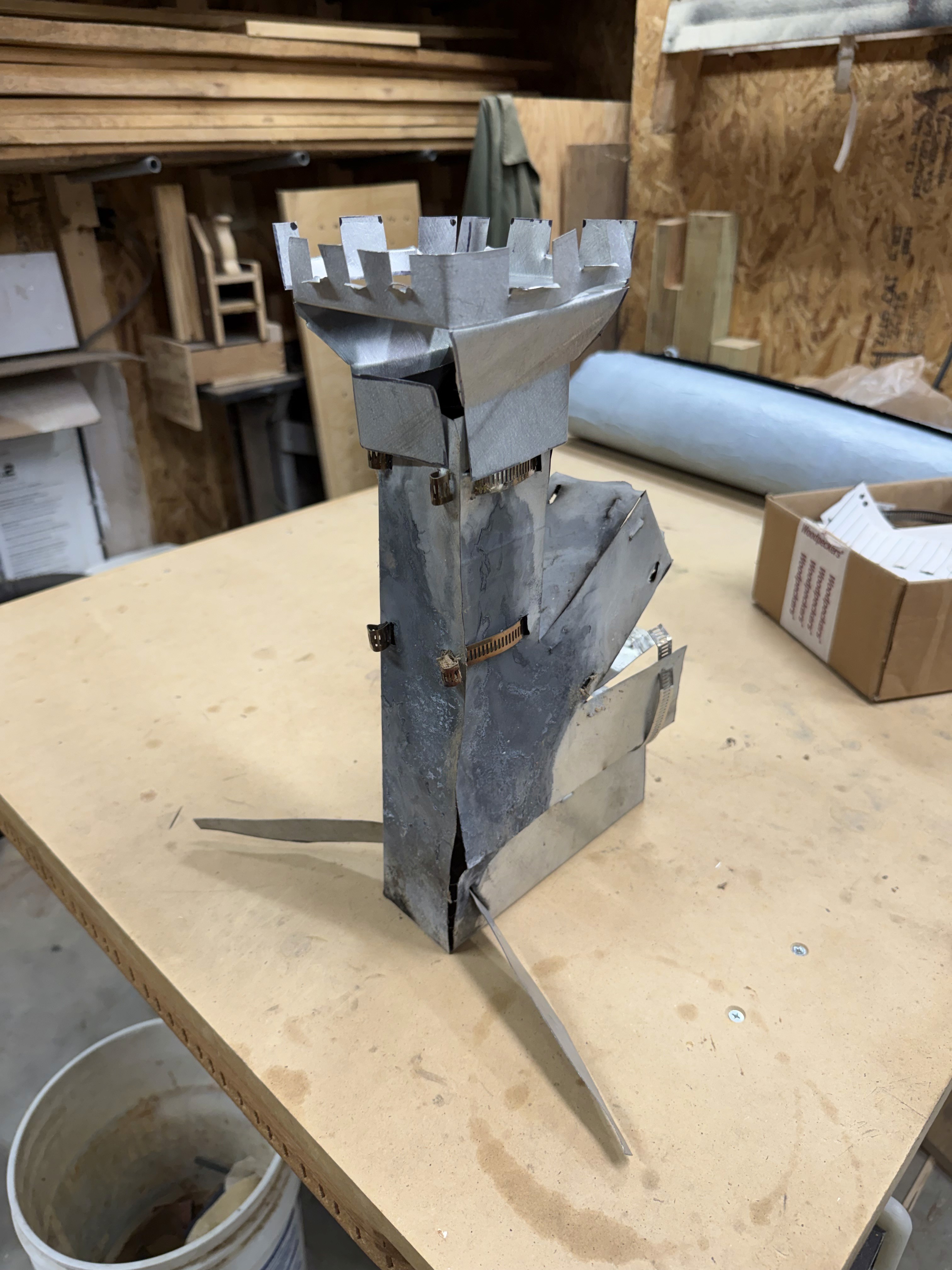
A compact, high efficiency camping stove optimized for sticks and scrap wood, made from leftover aluminum roofing
I was asked by a friend to design a small, portable stove that runs on unprocessed sticks. He showed me a similar design he saw online, made with 3 pieces of square steel pipe. At the time I didn't have access to a way to weld, so I used SOLIDWORKS to turn the design into a sheet metal pattern with fold lines. We cut it out from some scrap aluminum sheet and folded everything up, using wraps of steel wire to secure the folds.

I then began work on an improved version. I enlarged the air intake pipe and added a grate to hold active embers while allowing ash to fall through. I also changed the angle of the wood intake, preserving the self-feeding ability while reducing the amount of flame escaping.
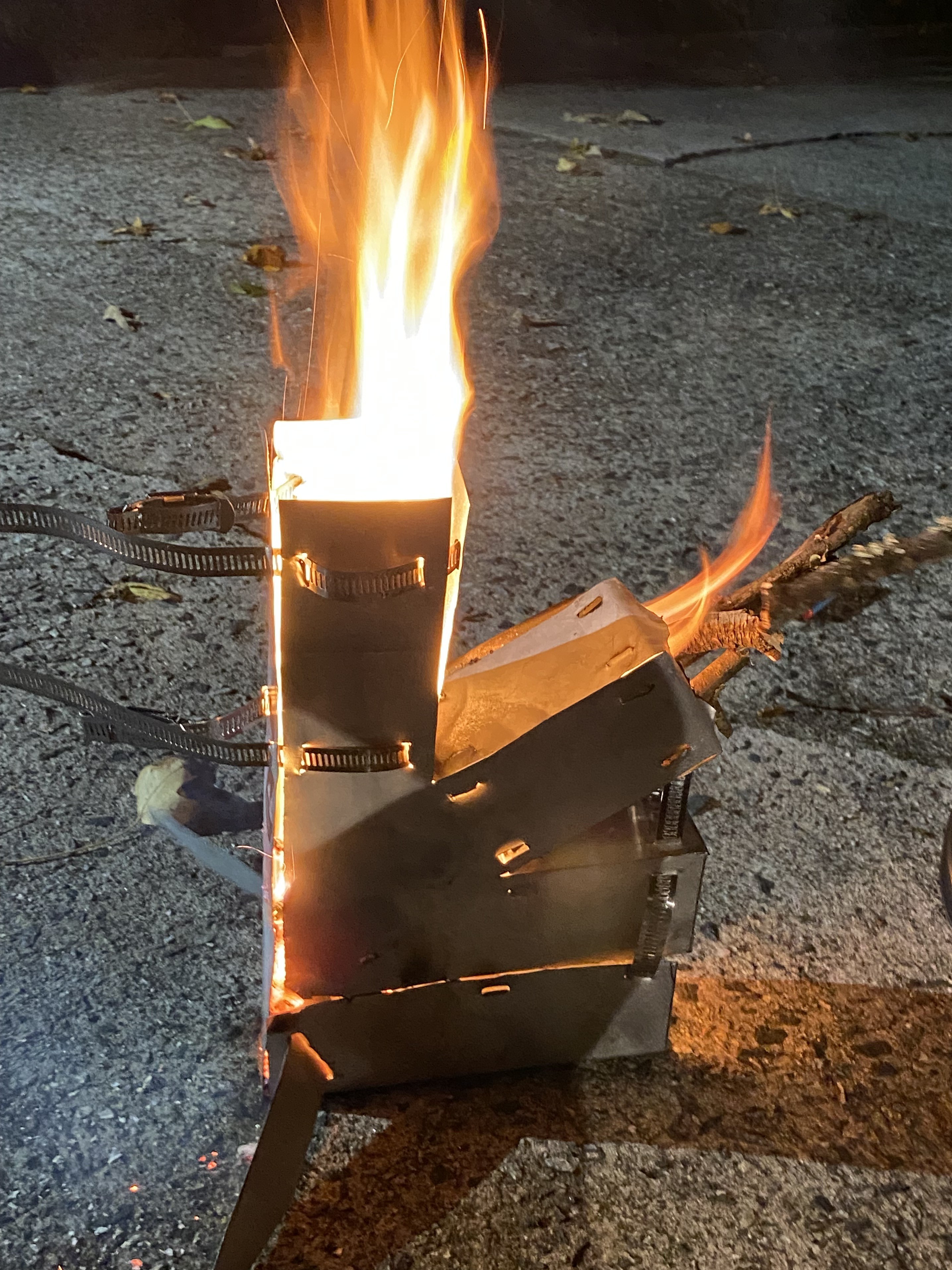
I designed a stovetop pan holder that would allow adequate airflow while staying stable. I also designed a stabilizer bar to prevent the entire assembly from tipping when a heavy pot or pan was placed on top.
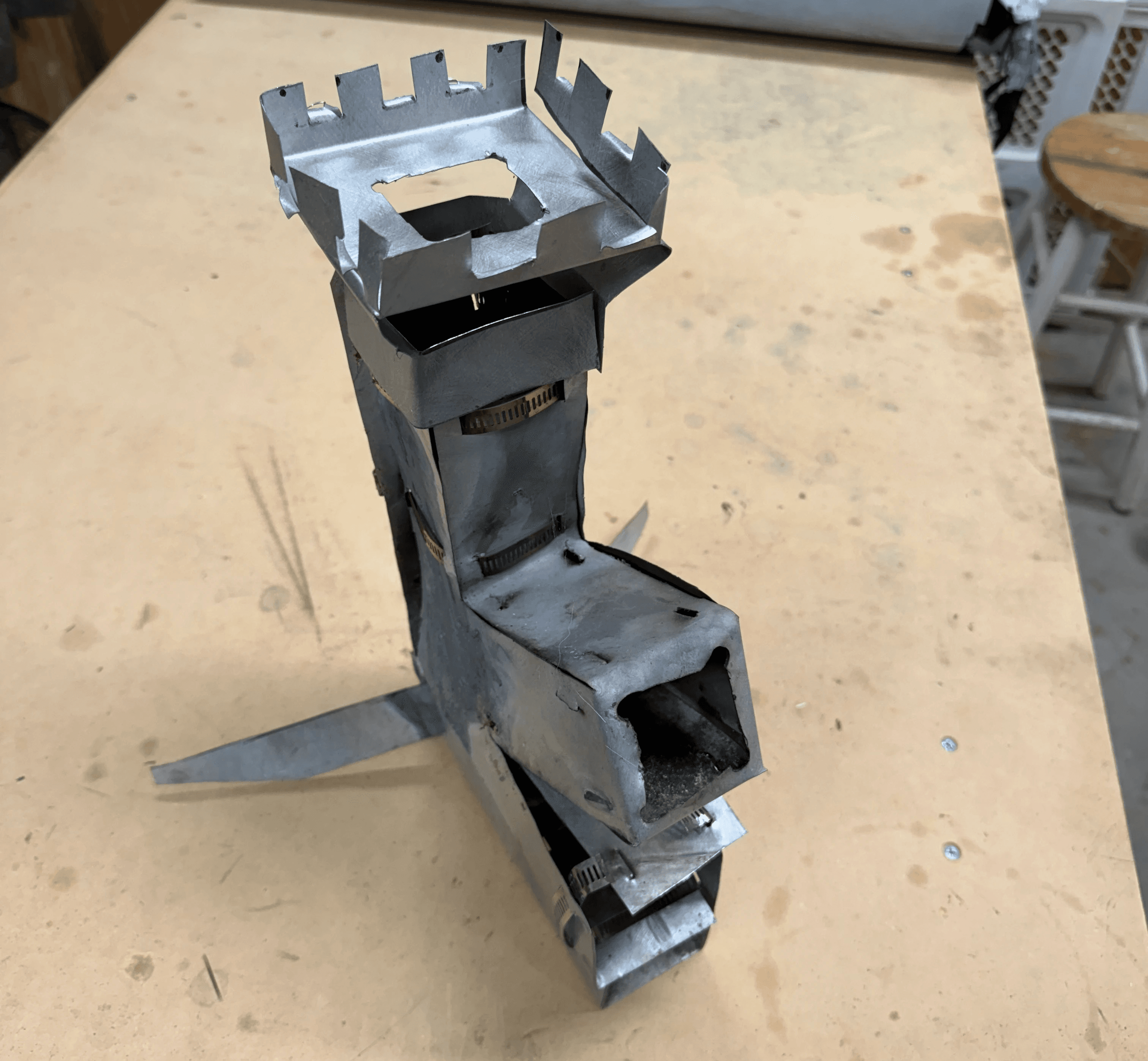

This stove (V1) worked well for burning sticks, but had a significant drawback. As ash built up, the air intake became clogged and efficiency was compromised. The wood intake pipe was also at too steep of an angle, which was causing flame to divert from the chimney.

This new version (V2) worked perfectly. The improved airflow resulted in a steady column of flame out of the chimney. Now that I had an efficient way to turn sticks into heat, I could start working on converting it into a useable stove.

Even after rough use from cooking many meals in many different environments, the stove is still in great condition. It is easy to use, lightweight, and cooks almost as fast as a propane camping stove.
Project Gallery